At Chainlink Logistics, we are seeing a clear shift: some customers who would normally ship by sea are increasingly turning to air freight for urgent and time-sensitive cargo.
The reason is simple. In today's environment, the cheapest freight option is not always the lowest-cost option.
When Time Costs More Than Freight
Ocean freight remains the most economical and practical choice for large-volume and non-urgent shipments. But when longer or unpredictable transit times threaten production, inventory or customer commitments, the calculation changes.
A delayed shipment can mean:
Production interruptions
Stock shortages
Missed project or delivery deadlines
Additional operational costs
In these situations, the higher cost of air freight may be justified by the cost of avoiding a delay.
It Doesn't Have to Be Air or Sea
Businesses are also becoming more flexible in how they route cargo.
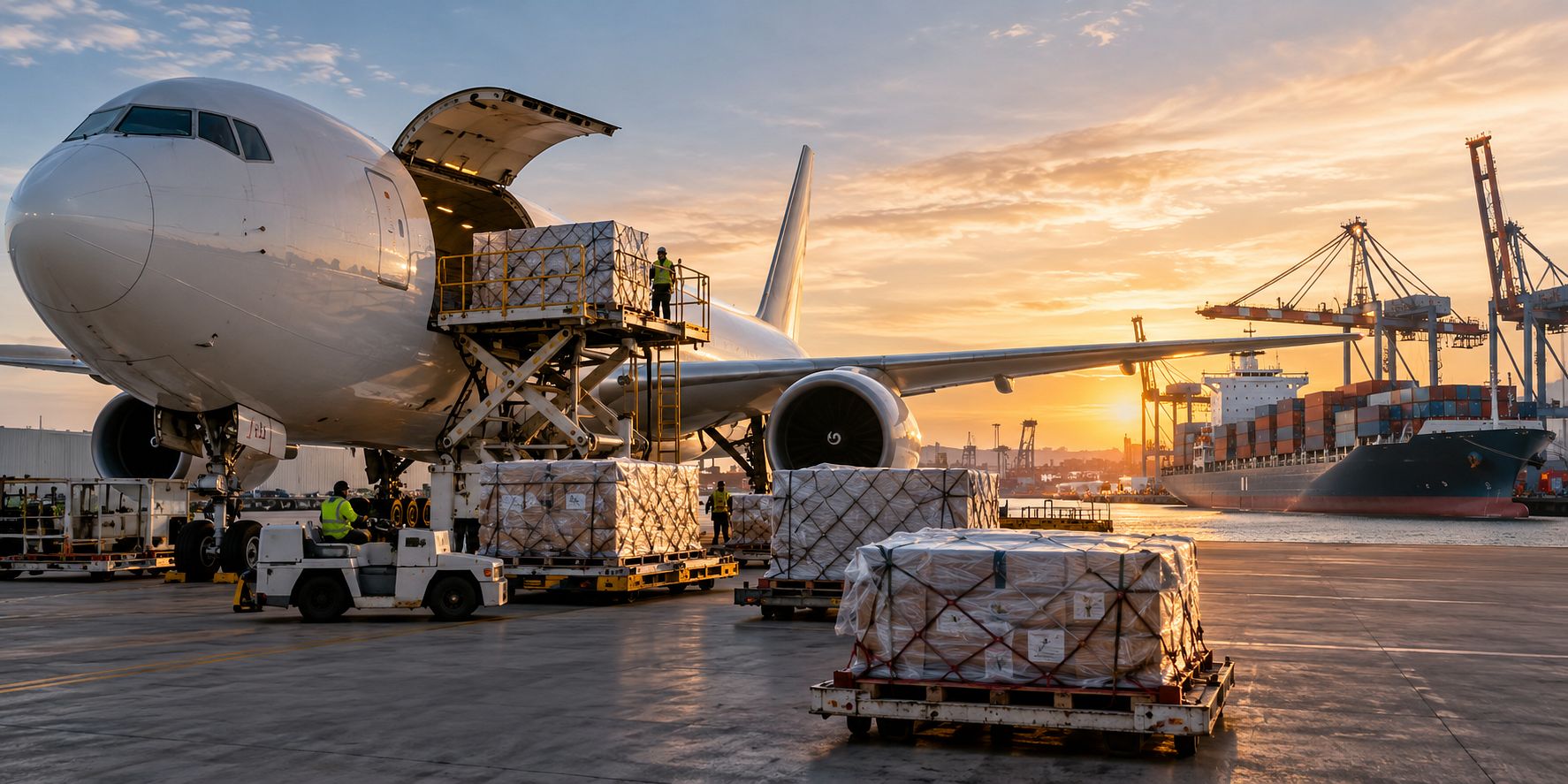
One increasingly practical approach is to split shipments: move the critical quantity by air while sending the remaining volume by sea.
This allows companies to protect urgent requirements without shifting the entire shipment to a higher-cost transport mode.
Flexibility Is the New Priority
Current Middle East disruptions reinforce one important supply chain lesson:
The best freight option is not necessarily the cheapest. It is the one that provides the right balance of cost, transit time and risk.
Air, ocean, road and multimodal solutions all have a role to play. The right choice depends on the cargo, urgency, available capacity and current routing conditions.
At Chainlink Logistics, we help customers evaluate these options and identify the most suitable routing strategy for each shipment.
Facing long transit times or have urgent cargo?
Contact Chainlink Logistics to explore the available alternatives.