The global logistics landscape is evolving rapidly—and recent developments are reinforcing a key reality: resilience is now as important as cost and speed.
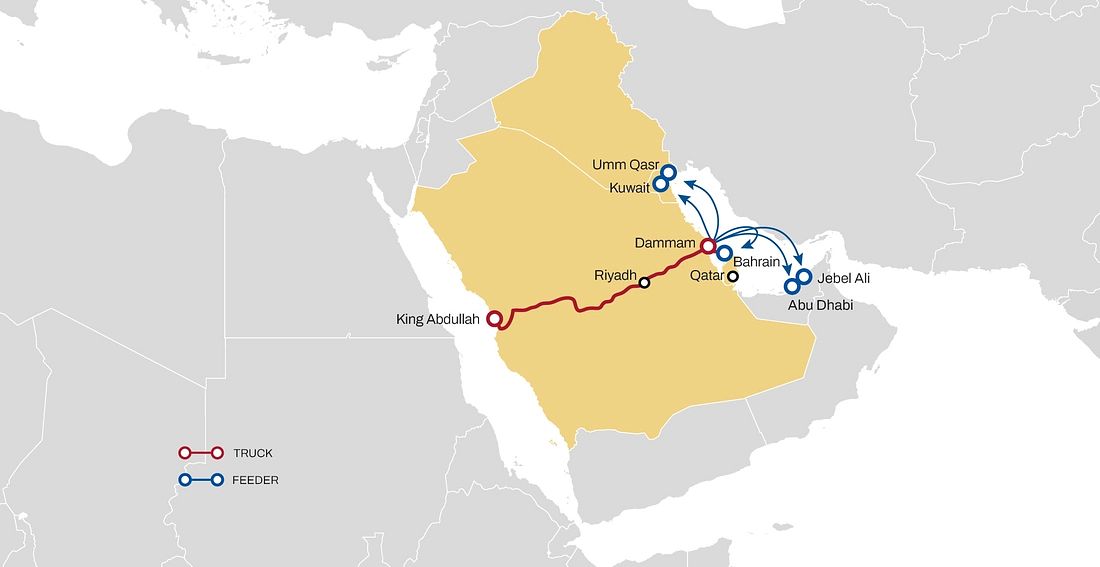
Mediterranean Shipping Company (MSC) has introduced a new service designed to bypass the Strait of Hormuz, one of the world’s most sensitive maritime chokepoints. By combining ocean freight with overland trucking across Saudi Arabia, this solution creates a more stable and efficient connection between Europe and the Gulf.
For businesses operating in today’s environment, this is more than a new route—it’s a shift in how supply chains are designed.
From Disruption to Opportunity
Ongoing instability around the Strait of Hormuz has led to increased freight costs and extended transit times, impacting supply chains across the region. Traditional routes are becoming less predictable, forcing companies to reconsider how they move cargo.
The new multimodal corridor offers a practical alternative:
Reduced transit times compared to disrupted sea routes
Greater reliability through diversified transport modes
Improved cost efficiency across the supply chain
This is exactly the type of flexibility modern logistics demands.
How the New Corridor Works
The service connects major European ports—including Antwerp, Valencia, and Bremerhaven—to regional gateways such as Abu Kir, King Abdullah Port, Jeddah, and Aqaba.
From these hubs, cargo is moved overland across Saudi Arabia, reaching key Gulf markets including the UAE, Kuwait, and Oman.
By integrating sea and land transport, this model avoids congested maritime chokepoints while maintaining consistent transit performance—typically within 10–14 days.
Saudi Arabia’s Growing Role as a Logistics Hub
At the center of this transformation is Saudi Arabia, which continues to invest heavily in infrastructure and connectivity.
Led by entities such as Saudi Ports Authority (Mawani) and supported by projects like NEOM, the Kingdom is positioning itself as a critical logistics bridge between continents.
Key developments include:
Expansion of port capacity and new global carrier services
Activation of multimodal corridors linking Europe, Egypt, and the Gulf
Strengthening of inland transport networks to support cross-border trade
These advancements are not only increasing efficiency—they are redefining regional trade routes.
What This Means for Our Clients
At Chainlink, we see this as a pivotal moment for supply chain strategy.
Businesses that adapt early can benefit from:
Faster and more predictable transit times
Reduced exposure to geopolitical risks
Optimized inventory and working capital management
Our role is to help clients navigate these changes—designing tailored logistics solutions that leverage emerging corridors while maintaining cost control and operational reliability.
Looking Ahead
This shift is not temporary. It reflects a broader move toward diversified, multimodal supply chains that prioritize resilience and performance.
As new corridors take shape, the ability to adapt quickly will define competitive advantage.
At Chainlink, we remain focused on delivering smart, flexible logistics solutions—ensuring our clients stay ahead in an increasingly complex global trade environment.